
And Why it matters
We reviewed the content and design of our courses every semester in the UTS pathway program I taught on prior to starting Sunrise Well. It was the most normal and practical thing to do, to make sure the course was up-to-date and aligned with broader learning goals. We updated the subjects with new content and checked that the outcomes and design were still relevant each year, setting aside trainings that were no longer needed, and bringing in new subjects that better suited student’s needs.
This is best practice for learning and education, but it is a practice that is often missing in corporate health, wellbeing, and performance training, especially for topics that largely remain the same over time, like stress management.
Workplace wellbeing training, leadership development, and burnout prevention are now core parts of most HR and L&D strategies. Yet many organisations are still delivering content that was designed for a very different workplace. The trainings are often designed by people who have a generalist understanding of wellbeing, held up by the house of cards that is AI research, and not having the depth of experience and knowledge to validate the information they’re using.
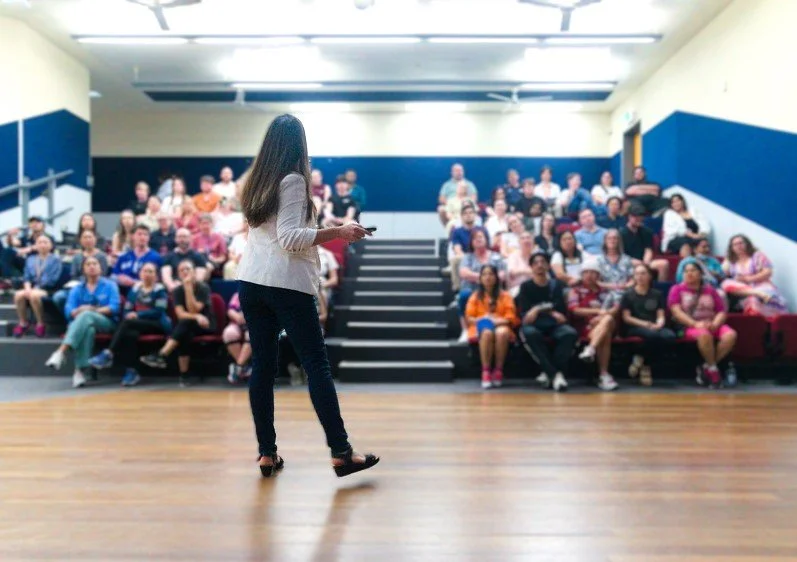
As a workplace wellbeing consultant and facilitator, I regularly review and refresh my workshops to ensure they remain relevant, evidence-based, and appropriate for today’s work environment. This year, that review led to some specific updates because the demands placed on people and leaders has shifted so dramatically. The training offered to organisations needs to reflect that change and support people well.
Got a Training Enquiry? Fill out the form below and we’ll be in touch shortly.
Why workplace wellbeing training needs regular review
The way people work has changed, and the world we’re living in has changed. Just ask any 30-something trying to buy a home, or any 40-something trying to juggle a double income family with raising children in an archaic education system and work structure.
Expectations are higher. Resources are tighter. The world is unpredictable. Psychological safety is a key operational issue.
HR leaders are now responsible for learning programs that must:
Support employee wellbeing without increasing risk
Align with psychosocial risk obligations
Equip managers to lead well under pressure
Be credible, practical, and applicable in real workplaces
Training that is not reviewed regularly can quickly lose impact and credibility. Examples don’t resonate. Tools feel unrealistic. Messages that once felt supportive can land poorly when workload and fatigue are high.
What Workplace wellbeing needs to focus on now
The review and refresh of Sunrise Well workshops was driven by three key factors:
Psychosocial risk management is under the microscope
Burnout and fatigue are higher than ever, particularly among managers
Wellbeing content is flooding social media, often lacking science and credibility
While wellbeing information is more accessible than ever, not all of it translates safely or effectively into organisational learning. The review of trainings this year focused on filtering, refining, and reframing content so it supports performance, safety, and sustainability.
GRAB THE LATEST WORKSHOP LIST
New topics in my workplace wellbeing and leadership training
The review expanded and reframed key topics to better support HR and L&D teams delivering wellbeing and leadership programs.
These include:
Burnout prevention for managers, with an emphasis on systems, role clarity, and workload, rather than individual resilience alone
The nervous system at work, explained in a way that supports self-regulation without drifting into clinical or therapeutic territory
Boundary setting and connected conversations, building manager confidence in realistic, respectful leadership behaviours
Fatigue management, helping people to understand the key aspects to recovery and managing fatigue
These topics are increasingly requested by HR leaders, and they must be facilitated with education, knowledge, and clarity.
Workplace wellbeing topics that stand the test of time
Some elements of workplace wellbeing training remain essential because they are grounded in how humans think, feel, and perform. However the science on these topics is constantly being updated, reviewed, and refined.
If you’re a generalist working in HR, you can easily miss key research that’s crucial for providing a scientifically-sound and reliable training for your teams.
Some of these topics include:
How stress affects decision-making, behaviour, and performance
Why self-regulation is foundational for leadership capability
The role of psychological safety in team effectiveness
The value of small, consistent habits over quick wellbeing fixes
This year the refresh focused on re-evaluating key research and supporting evidence against current knowledge and practice, and a review of how they are delivered, with clearer language and examples that reflect modern work realities.
Why HR and L&D should be cautious with internal delivery
Many HR teams deliver wellbeing and leadership training internally, and in some cases, that works well.
However, topics such as burnout, stress, and psychosocial risk require a level of nuance that is easy to underestimate. And while teams may put together trainings in response to a survey or the perceived needs of their teams, it often takes an expert to understand which trainings are going to be most suitable for their needs.
Small missteps can have unintended consequences, such as:
Encouraging disclosure without adequate safeguards
Oversimplifying complex wellbeing concepts
Leaving managers unsure what action is actually expected
Providing incorrect research or data, or sharing models and guidelines which are now out-of-date or misguided
These risks aren’t always obvious to spot and prevent, especially when HR is time-poor or engaged in multiple projects.
The value of an external workplace wellbeing facilitator
An experienced external facilitator brings perspective that internal teams often can’t access easily.
This includes:
Objectivity and psychological safety for participants
Experience across multiple organisations and industries
Clear boundaries around what learning should and should not cover
Qualified and up-to-date knowledge and frameworks
Evidence-based framing that protects both people and the organisation
For HR leaders, external facilitation is less about outsourcing capability and more about protecting quality, credibility, and outcomes.
A final thought for HR leaders
Refreshing workplace wellbeing training isn’t about chasing trends or reinventing learning programs.
It’s about ensuring your training reflects the reality your people are working in now.
For HR and L&D teams, regular review of wellbeing and leadership development content is part of good governance, risk management, and people strategy.
Contact me for the latest Workshop List for your organisation.
GET Help bringing your wellbeing project to life
Do you want expert support in delivering a wellbeing project or training to your workplace or community?
Or are you hoping to bring evidence-based behaviour change to your teams?
Bringing wellbeing to small and large groups is not always a straight-forward practice.
It requires you to have an in-depth understanding of the topic, skills in research and presenting, and an ability to adapt and be flexible when project needs change.
If you’d like help putting together and delivering a wellbeing project, we can help.
We’ve worked with national and international clients to design and deliver educational programs and content to create lasting change within workplaces and community groups. We’d love to talk with you about how we can help you reach more people and get better results.